How to Tell if Your Roof Leak is a Patch Job or a Full Replacement
Water can travel horizontally along roofing timbers for up to 20 feet before eventually dropping down to stain your ceiling. That ominous brown water spot right above your living room sofa might actually originate from a compromised flashing detail on the complete opposite side of your home. Figuring out the true source and severity of this moisture intrusion is the critical first step in protecting your property's structural integrity.
Seeing a damp patch spreading across your plasterboard is enough to make any homeowner's heart sink. Panic often sets in, immediately followed by financial dread. Will a quick, inexpensive dab of sealant fix the issue, or are you looking at a massive, property-wide roofing overhaul? Making the wrong decision can either lead to wasted money on a roof that was already failing or completely unnecessary expenses when a minor repair would have sufficed.
In this comprehensive guide, we will explore the precise diagnostic steps, visual indicators, and hidden symptoms that determine whether your roof requires a targeted patch job or a full replacement.
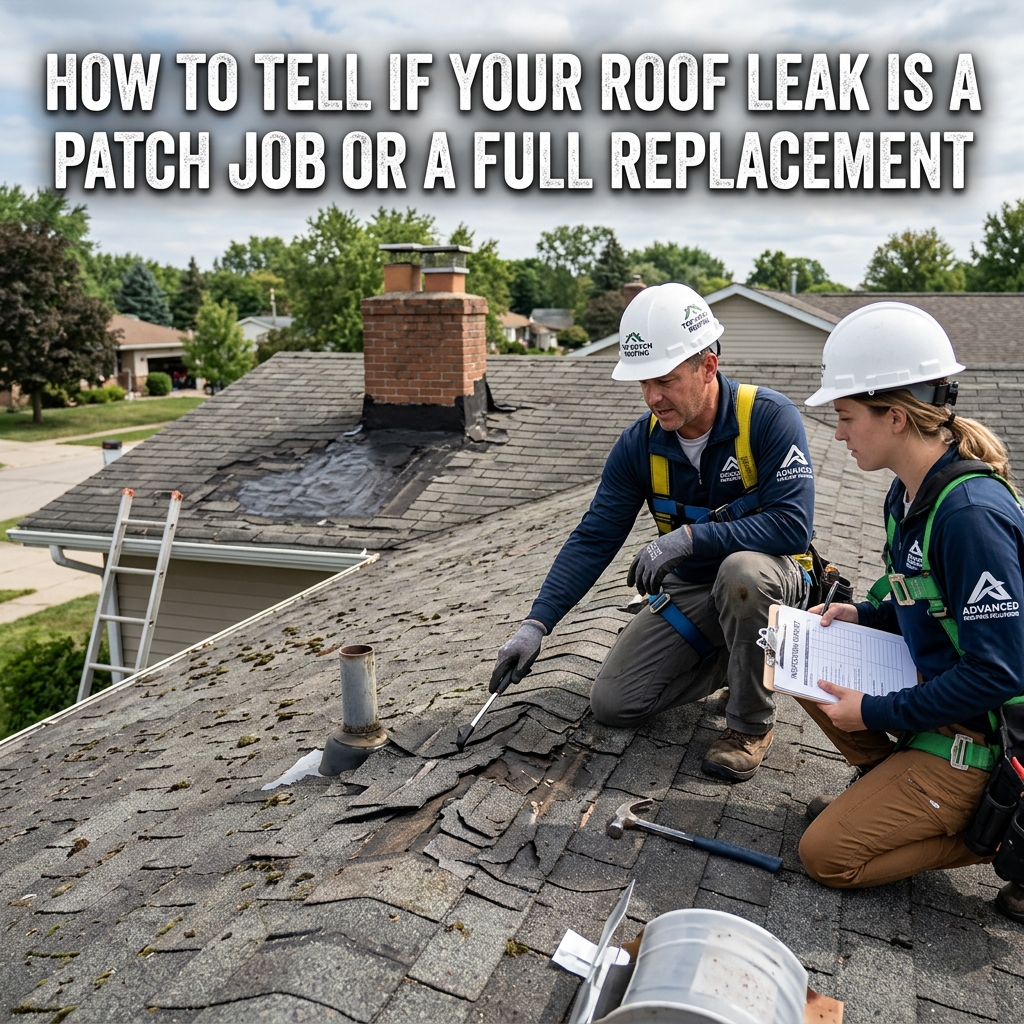
The Anatomy of a Roof Leak: What Homeowners Need to Know
Before you can decide between a repair and a replacement, you must understand how moisture infiltrates a property. Your roof is not just a collection of slates or shingles; it is a complex, multi-layered system designed to shed water efficiently. When one component fails, the entire system is put at risk.
The primary layers of a standard residential roof include:
- The Substrate/Decking: Usually made of plywood or OSB, this is the structural foundation resting on your roof trusses.
- The Underlayment: A water-resistant or waterproof barrier material installed directly onto the deck.
- Flashing: Metal strips installed around joints, chimneys, skylights, and valleys to direct water away from vulnerable seams.
- The Outer Material: The visible part of the roof—tiles, slates, asphalt shingles, or flat roofing membranes.
- Ventilation: Soffits and ridge vents that allow the attic space to breathe, preventing internal condensation.
A leak occurs when water breaches the outer material, bypasses the flashing, penetrates the underlayment, and soaks into the decking. From there, gravity and capillary action take over. The water creeps along the path of least resistance until it finds a weak spot in your ceiling.
Signs You Only Need a Patch Job
Not every water stain spells impending doom for your bank account. In many cases, isolated damage can be efficiently and affordably repaired. Here are the key indicators that your roof might just need a localized patch:
1. Isolated, Sudden Storm Damage
If your roof is relatively young and was functioning perfectly until a severe storm hit, you are likely a candidate for a patch. High winds can rip off a few tiles or shingles, while flying debris like tree branches can puncture specific areas. If the damage is confined to a small, easily identifiable section, a targeted repair is the most logical route.
2. The Roof is Relatively New
The age of your roof plays a massive role in the repair-versus-replace debate. A standard asphalt shingle roof typically lasts 20 to 25 years, while slate or tile roofs can last 50 years or more. If your roof is less than a decade old and exhibits a leak, the underlying materials (decking and underlayment) are likely still in prime condition. Replacing a young roof is almost never recommended unless structural failure has occurred.
3. Compromised Flashing
Flashing is notoriously the weakest link in any roofing system. The metal strips around chimneys, skylights, and dormers expand and contract with temperature changes. Over time, the sealant or caulking can dry out, crack, and pull away. If an inspection reveals that the water is entering through a faulty flashing seam while the rest of the roof is sound, replacing or resealing that specific flashing is all that is required.
4. A Single, Localized Interior Damp Spot
If you have one distinct water ring on your ceiling and the rest of your attic space is bone-dry, the problem is likely highly localized. A singular breach usually indicates a specific, isolated failure rather than a systemic breakdown of your entire roofing structure.
Signs You Need a Full Roof Replacement
Sometimes, a patch is just a band-aid on a gaping wound. Attempting to repair a roof that has fundamentally failed will only result in continuous leaks, chronic stress, and a drain on your finances. Here are the undeniable signs that it is time for a total replacement:
1. The Roof is Past Its Lifespan
As mentioned earlier, roofing materials have expiration dates. If your asphalt shingle roof is 20 to 25 years old and starts leaking, patching it is a poor investment. The shingles have likely lost their protective granules, become brittle, and are losing their ability to shed water. Fixing one spot today only means another spot will inevitably leak tomorrow.
2. Widespread, Multiple Leaks
If you go up to your loft during a heavy downpour and see water trickling in from three or four different locations, your underlayment has fundamentally failed. Multiple leaks suggest that the entire system's integrity is compromised. Patching multiple areas is often so labor-intensive that the cost rapidly approaches that of a new roof, making a replacement the better long-term financial decision.
3. Sagging Roof Decking
Step outside and look at your roofline from the street. Does the ridge line look straight, or does it dip and sag in the middle? A sagging roof is a massive red flag. It indicates that moisture has deeply penetrated the structural decking or trusses, causing the wood to rot and warp under the weight of the roofing materials. No amount of exterior patching can fix failing structural integrity. In this case, the old roof must be stripped off entirely, and the rotten wood replaced.
4. Severe Granule Loss or Curled Shingles
If your gutters are constantly filled with coarse, sand-like granules, your shingles are deteriorating. These granules protect the asphalt from the sun's harsh UV rays. Without them, the shingles bake, curl at the edges, and crack. Curled, cupped, or clawing shingles cannot create a watertight seal. If your roof looks like it has a skin condition, it needs replacing.
5. Pervasive Mold and Rot in the Attic
A quick inspection of your attic can tell you a lot. If the underside of the decking is covered in black mold, smells deeply musty, or feels spongy to the touch, you have a severe, long-term moisture problem. This level of damage requires ripping up the entire section to lay down fresh, dry timber.
The Hidden Dangers of Ignoring Roof Leaks
Whether you need a patch or a replacement, the one thing you absolutely cannot do is ignore the problem. Homeowners sometimes place a bucket in the loft and forget about it, hoping the problem will go away. It won't. Water is relentless, and a delayed reaction will drastically escalate your repair costs.
Structural Damage: Wood rot spreads. A small leak left unchecked will eventually compromise the trusses and joists holding up your home. If the structural timber becomes severely decayed, you won't just need a roofer; you will require the structural expertise of reliable local builders to completely reconstruct your loft space.
Electrical Fire Hazards: Water and electricity are a deadly combination. When water seeps into your ceiling cavity, it often runs along beams where electrical wiring is routed. If moisture gets into junction boxes or exposed wiring, it can cause short circuits, blown fuses, or even catastrophic electrical fires. If you suspect water has reached your wiring, you must turn off your power at the mains and immediately contact certified local electricians to assess the hazard before tackling the roof.
Health Risks from Mold: Damp environments are breeding grounds for toxic black mold (Stachybotrys chartarum) and mildew. Mold spores can spread through your HVAC system, causing severe respiratory issues, allergic reactions, and asthma attacks, particularly in young children and the elderly.
Ruined Insulation: When fiberglass or cellulose attic insulation gets wet, it clumps together and loses its thermal resistance (R-value). Even after it dries, it rarely regains its original effectiveness. You will end up paying higher heating and cooling bills until the contaminated insulation is replaced.
Cost-Benefit Analysis: Patching vs. Replacing
When faced with a roofing issue, the financial aspect is often the primary concern. Let's break down the economics of patching versus replacing.
The Cost of Patching: A localized patch job is significantly cheaper upfront. Depending on the material and the extent of the damage, a minor repair might cost a few hundred pounds. However, this is only cost-effective if the repair lasts. If you are patching an old roof, you are simply playing 'whack-a-mole' with leaks. Spending £300 every six months on patches will quickly drain your wallet, and you will still end up needing a new roof eventually.
The Cost of Replacing: A full roof replacement is a major capital expense, often running into the thousands. However, it offers guaranteed peace of mind. A new roof comes with robust warranties, drastically improves your home's curb appeal, increases property value, and significantly boosts energy efficiency. If you plan on selling your home in the next five to ten years, a new roof offers an excellent return on investment (ROI), as prospective buyers are often deterred by old, patched-up roofs.
The 30% Rule: A common rule of thumb in the roofing industry is the 30% rule. If more than 30% of your roof's surface requires repairs, or if the cost of the repair exceeds 30% of the cost of a brand new roof, it is almost always more economical in the long run to opt for a full replacement.
How to Conduct a Safe DIY Roof Inspection
Before calling in the professionals, you can perform a preliminary inspection yourself. However, safety must be your absolute priority. We do not recommend climbing onto a steep, wet, or damaged roof. You can gather a massive amount of information with your feet firmly planted on the ground or inside your home.
Step 1: The Exterior Ground Inspection Grab a pair of binoculars and walk around the perimeter of your home. Look for:
- Missing, cracked, or misaligned slates/tiles.
- Shingles that are curling or blistering.
- Damaged or missing flashing around the chimney.
- Debris buildup in roof valleys.
- Granules in the gutters or at the base of downspouts.
Step 2: The Interior Attic Inspection Armed with a strong flashlight, head into your loft during a dry day. Turn off the lights and look for daylight peeking through the roof boards. Any visible light means water can get in. Next, look for:
- Dark, water-stained wood.
- White or black mold growth.
- Rusted nails poking through the deck.
- Damp or flattened insulation.
Step 3: The Ceiling Check Inside your living space, monitor the damp patch. Trace its shape with a pencil and check back a few days later to see if it has grown. Look for peeling paint, bubbling plaster, or sagging drywall.
The Importance of Professional Assessment
While a DIY inspection is helpful, it is no substitute for a professional eye. Roofing systems are complex, and water can be incredibly deceptive. A tiny hole in the roof might be causing massive internal damage that you cannot easily see.
Attempting a DIY repair with a tube of silicone sealant and a ladder is highly discouraged. Not only is working at height incredibly dangerous for an untrained individual, but improper repairs can actually void your home insurance policy or existing roof warranties. Trapping moisture inside the roof by applying sealant incorrectly will accelerate wood rot.
To get a true understanding of your roof's condition, you must consult with highly experienced, vetted roofing specialists. Professional tradespeople have the training, safety equipment, and diagnostic tools (such as thermal imaging cameras and moisture meters) to pinpoint the exact cause of the leak. They can accurately assess whether the underlayment is salvageable or if a complete tear-off is required.
Choosing the Right Tradespeople in Warrington
When your home is vulnerable to water damage, time is of the essence, but rushing into hiring the first contractor you find can lead to disaster. The roofing industry, unfortunately, attracts its fair share of rogue traders who promise quick fixes but deliver shoddy workmanship.
Here is how to ensure you hire a reputable professional:
- Verify Local Credentials: Ensure the roofer is locally based with a verifiable physical address in the Warrington or Cheshire area. Local tradespeople rely on their community reputation.
- Check Insurance and Guarantees: A legitimate roofer will carry extensive public liability insurance. They should also offer written guarantees on both the materials used and their labor.
- Request Detailed Written Quotes: Don't accept vague estimates. A professional quote should break down the cost of materials, labor, scaffolding, and waste removal. This allows you to accurately compare a patch job versus a replacement.
- Read Independent Reviews: Look for tradesmen who have been vetted and reviewed by other homeowners in your area.
- Don't Be Pressured: Be wary of contractors who try to pressure you into signing a contract immediately by claiming your roof is on the verge of imminent collapse. A professional will explain the situation calmly, provide evidence (such as photos taken on the roof), and give you time to make an informed decision.
Preparing Your Home for Roofing Work
Once you have decided whether to patch or replace, and you have hired the right professionals, you need to prepare your home for the upcoming project. Roofing work is inherently noisy, messy, and disruptive.
- Clear the Perimeter: Move patio furniture, potted plants, and vehicles away from the house. Falling debris is inevitable, even with careful workers.
- Protect the Loft: Dust and small debris will undoubtedly fall into your attic space during a roof replacement or major patch. Cover any valuable items stored in the loft with dust sheets.
- Secure Wall Decor: The vibrations from hammering on the roof can travel down your walls, potentially knocking pictures or mirrors off their hooks. Take down fragile wall hangings before the work begins.
- Inform Your Neighbors: If you live in a semi-detached or terraced property, inform your neighbors about the schedule. Scaffolding might temporarily impact their access or view, and giving them a heads-up is common courtesy.
Conclusion: Making the Right Call for Your Property
Discovering a roof leak is never a pleasant experience, but dealing with it promptly and correctly will save you thousands of pounds in secondary structural and electrical damage.
To recap: if your roof is relatively young, the damage is localized to a specific area, or the issue stems from a singular failed piece of flashing, a targeted patch job is the smart, cost-effective choice. However, if your roof is nearing the end of its life expectancy, exhibits widespread granule loss, sags under its own weight, or is leaking in multiple rooms simultaneously, continuing to patch it is a false economy. A full replacement will be necessary.
Always prioritize safety, avoid risky DIY fixes, and rely on the expertise of vetted local professionals to diagnose and cure the dampness threatening your home. Protecting the roof over your head is, quite literally, the most important investment you can make in your property.
Enjoyed this article?
Need a Verified Tradesperson in Warrington?
Browse verified local professionals across Warrington & Cheshire. Compare reviews, check qualifications, and get free quotes.