Repairing vs. Replacing Your Wooden Windows: The Ultimate Guide for Warrington Homeowners
The wind whistled through the gaps of Elias’s century-old sash windows, a sound he had grown to mistake for the house breathing. He traced the flaking white paint with a thumb, feeling the soft, sponge-like texture of rot beneath the surface of the sill. In that moment, the silent debate between preservation and progress finally demanded an answer.
For many owners of period properties in Warrington, from the Victorian terraces of Latchford to the Edwardian villas in Stockton Heath, this scene is all too familiar. Wooden windows are the eyes of a home; they provide character, architectural integrity, and a tangible link to the past. However, they are also prone to the ravages of time and the British weather. When they begin to fail, every homeowner faces the same critical question: do you invest in a meticulous restoration, or is it time to pull them out and start fresh?
This guide provides a comprehensive deep-dive into the technical, financial, and aesthetic considerations of repairing versus replacing timber windows.
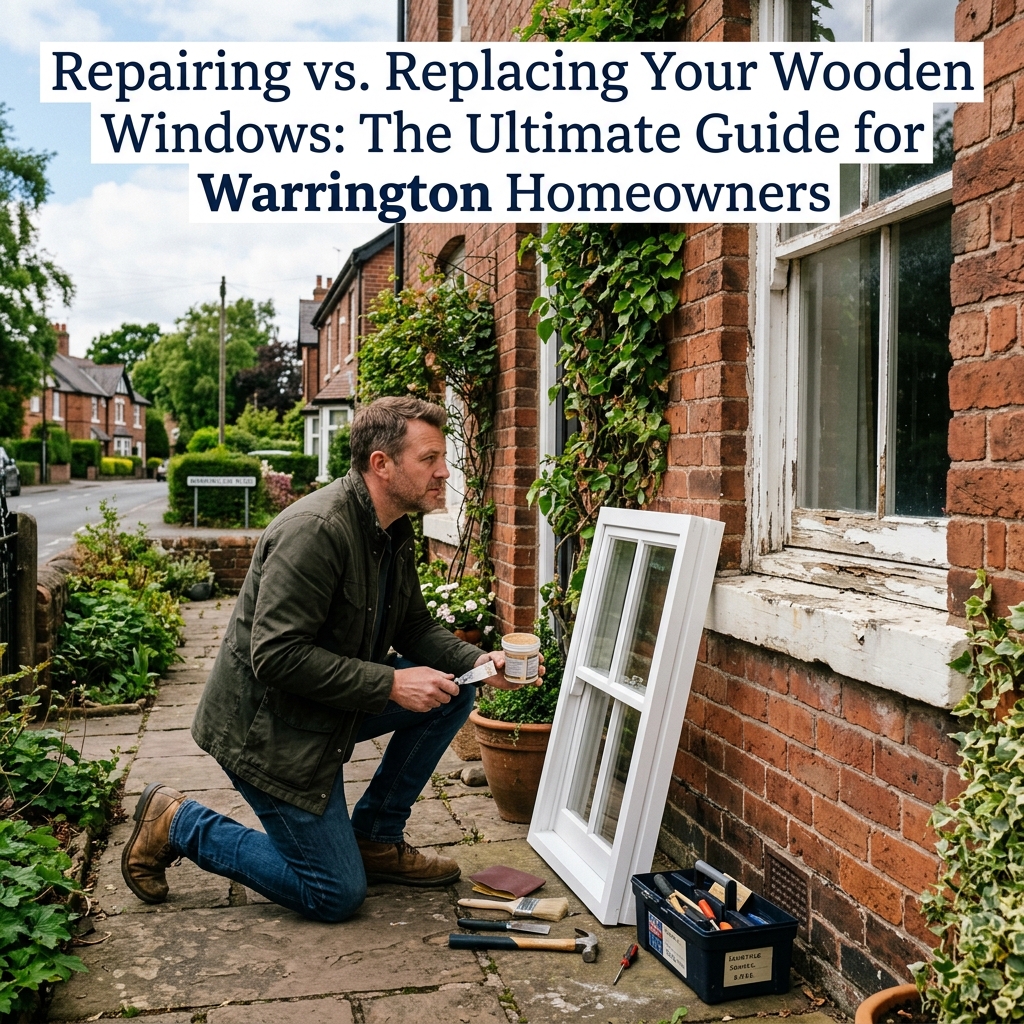
The Psychology of the Timber Window
There is a reason why wooden windows persist despite the rise of modern alternatives. Timber is a natural insulator, aesthetically versatile, and, when maintained correctly, can last for centuries. Unlike uPVC, which has a finite lifespan and often looks out of place on a heritage building, timber windows can be sanded, filled, repainted, and structurally reinforced.
However, the emotional connection to original features often clouds the practical reality of their condition. We must look at windows through three distinct lenses: structural integrity, thermal performance, and financial viability.
Identifying the Symptoms: When is a Window "Broken"?
Before deciding on a course of action, you must conduct a thorough audit of your window’s current state. Not all damage is terminal.
1. Cosmetic Peeling and Surface Cracks
If your main issue is flaking paint or hairline cracks in the timber surface, you are likely looking at a simple maintenance task. This occurs when the protective coating fails, allowing UV rays and moisture to reach the wood. As long as the wood underneath is firm, a professional decorator or skilled Builders in Warrington can sand these back and refinish them.
2. The Screwdriver Test for Rot
Rot is the primary enemy of the wooden window. Take a flat-head screwdriver and press it into the bottom rail and the sill—the areas where water tends to sit. If the metal sinks into the wood with little resistance, you have wet rot. If the rot is localized (less than 15-20% of the frame), it is often repairable. If the screwdriver passes through the core of the timber in multiple places, the structural integrity is compromised.
3. Draughts and Rattles
Wooden windows, particularly sliding sashes, are notorious for draughts. This is often caused by the natural shrinking of timber over decades or the loss of original brush seals. Draught-proofing is a non-invasive repair that can significantly improve comfort without needing a full replacement.
4. Condensation and Failing Glazing
In older homes, single-pane glass is the norm. While this is historically accurate, it leads to significant heat loss and internal condensation. If you notice dampness around the inner frame, it could be leading to hidden rot. Interestingly, sometimes dampness near windows isn't the window's fault at all; internal leaks can travel through wall cavities. If you suspect an internal leak is contributing to the moisture, consulting experienced Plumbers in Warrington can help rule out pipe-related dampness.
The Case for Repair: Restoration Techniques
Restoration is often the preferred choice for those living in Conservation Areas or Listed Buildings where the local planning authority may prohibit modern replacements. But beyond legal requirements, repair has several advantages.
Splicing and Resin Repairs
Modern epoxy resins have revolutionized window repair. Specialist contractors can remove the rotted sections of a sill or stile and rebuild the area using high-strength resins that bond with the existing timber. For larger sections, 'splicing' involves cutting out a wedge of rotted wood and replacing it with a new piece of seasoned timber, glued with waterproof adhesive and planed to match the profile.
Slimline Double Glazing
A common myth is that you must replace the whole frame to get double glazing. Many companies now offer 'slimline' units—double-glazed panels filled with Krypton or Xenon gas that are thin enough to fit into the existing rebates of a traditional sash. This allows you to keep the original wood while achieving modern U-values.
The Environmental Factor
Repairing is almost always the 'greener' choice. It preserves the 'embodied carbon' of the original timber and prevents old materials from heading to a landfill. Furthermore, new timber—even if sustainably sourced—requires energy for felling, transport, and processing.
The Case for Replacement: When to Start Over
There comes a point where the cost of repair outweighs the value of the window. If the frames are warped, the joints have completely failed, or the timber is riddled with dry rot (which is far more aggressive than wet rot), replacement is the logical path.
New Timber Technology
Modern timber windows are not like the ones installed in the 1970s. Technologies like Accoya (acetylated wood) create timber that is virtually rot-proof and dimensionally stable, meaning it won't swell or shrink. These windows come with warranties often exceeding 50 years.
Improving the 'Envelope'
Replacing windows allows for a complete overhaul of the window 'envelope.' This means better insulation around the box frame, integrated weather stripping, and the use of high-performance Low-E glass. For homeowners looking to maximize their property’s Energy Performance Certificate (EPC) rating, high-quality replacements are often the only way to hit those top-tier targets.
Curb Appeal and Maintenance
New windows can instantly refresh the look of a property. While you are upgrading the facade, don't forget the surrounding environment. Overhanging branches or dense ivy can trap moisture against your new timber frames. Coordinating with Gardeners & Landscapers in Warrington to clear vegetation away from the house can extend the life of your new windows by years.
Financial Breakdown: Repair vs. Replace
In the short term, repair is significantly cheaper. Restoring a single sash window might cost between £400 and £800, depending on the level of rot. A full, high-quality timber replacement can easily cost £1,500 to £2,500 per window.
However, the ROI (Return on Investment) should be calculated over a 20-year period. A repaired window will require repainting every 5-7 years. A modern Accoya window might only need a touch-up every 10-12 years. Additionally, the energy savings from modern glazing can shave hundreds off annual heating bills, making replacement more attractive for long-term residents.
Navigating Planning Permission in Warrington
Warrington Borough Council has specific guidelines for heritage zones. If your home is in a Conservation Area—such as the Bridge Street or Palmyra Square vicinity—you will likely need planning permission to change the appearance of your windows.
Replacing timber with uPVC is usually rejected in these areas. If you are replacing timber with timber, it must usually be 'like-for-like' in terms of profile, glazing bar thickness, and finish. Repairing, however, rarely requires planning permission as it is considered 'maintenance.' This makes restoration a much smoother path for many local residents.
The Professional Touch: Finding the Right Tradesperson
Whether you choose to repair or replace, the quality of the work is paramount. Window restoration is a niche craft. You need someone who understands the weight-and-pulley systems of sash windows or the specific joinery of a 1930s casement.
When hiring, ask for a portfolio of similar period properties. A general builder might be able to install a pre-made window, but a specialist joiner is needed for a high-end restoration. Always check that your chosen professional is vetted and has local references to ensure they understand the specific architectural styles found in Cheshire.
Summary Checklist
To help you decide, use this quick checklist:
- Is the rot localized? (Yes = Repair | No = Replace)
- Is the home listed or in a conservation area? (Yes = Likely Repair/Like-for-like Replace)
- Are the frames warped or out of square? (Yes = Replace | No = Repair)
- Is energy efficiency your #1 priority? (Yes = Replace with modern timber)
- Is budget tight in the short term? (Yes = Repair)
Conclusion
Repairing or replacing your wooden windows is not just a home improvement task; it is an act of stewardship. By choosing the right path, you ensure that your Warrington home remains beautiful, warm, and structurally sound for the next generation. Whether you are calling in the Builders in Warrington to reconstruct a frame or simply looking to draught-proof your existing sashes, the key is to act before the damp winter months settle in. Your windows are your home's connection to the world—make sure they are worth looking through.
Enjoyed this article?
Need a Verified Tradesperson in Warrington?
Browse verified local professionals across Warrington & Cheshire. Compare reviews, check qualifications, and get free quotes.